Teaching and Learning

A man with gray hair wearing a black suit with a white shirt underneath smiles at the camera.

The Denmark School District strives to provide the highest level of educational programming to ensure student success within school and beyond.  To this end, the curriculum shall be developed, evaluated, and adopted on a continuing basis and in accordance with a plan for curriculum growth.

The Denmark School District's Curriculum and Standards provide instruction in courses consistent with all applicable State and Federal regulations and are consistent with the District's philosophy and goals and ensure the possibility of their achievement.  Our curriculum and programs allow for the development of individual talents and interests, recognize that learning styles of students may differ, and provide a strategy for continuous and cumulative learning through effective articulation at all levels, particularly of those skills identified as essential and life-role skills.

Below you'll find information pertaining to our district's approach to universal instruction, continuous improvement, student support, and assessment.

Lance Grishaber
Director of Teaching and Learning

920.863.4176
grishaberl@denmark.k12.wi.us

Our Commitments

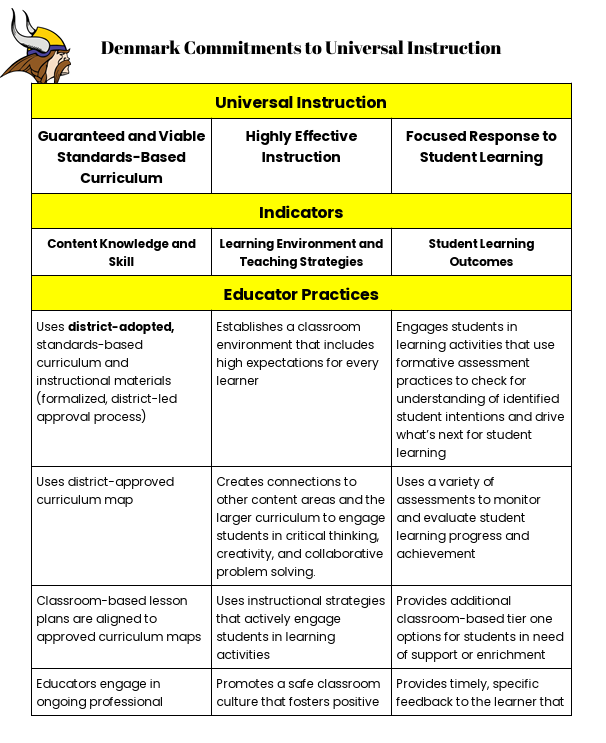
Commitments to Universal Instruction

Commitments to Universal Instruction

Our Department Will:

  • Use district adopted standards-based curriculum and instructional materials.

  • Use collaboratively agreed upon standards-based learning intentions and success criteria as unit and lesson foundation.

  • Provide success criteria that describes how students will demonstrate they understand the learning.

Our Staff Will:

  • Set high and demanding academic expectations for every student.

  • Promote a safe classroom culture that fosters positive relationships.

  • Incorporate instructional intentions into daily lessons, requiring students to explain in their own words.

  • Demonstrate success criteria by providing models of both strong and weak work, rubrics, checklists, etc.

  • Use instructional strategies/techniques that elicit evidence of student learning in relation to the instructional intentions.

Our Students Will:

  • Engage in learning activities that check for understanding of identified learning intentions.

  • Receive scaffolding for support so all students can achieve the lesson intention(s).

  • Hear both positive and corrective feedback directly aligned to achievement of learning intentions.

  • Use feedback to support student self-monitoring.

  • Drive their own learning through inquiry and engineering practices.

Continuous Improvement

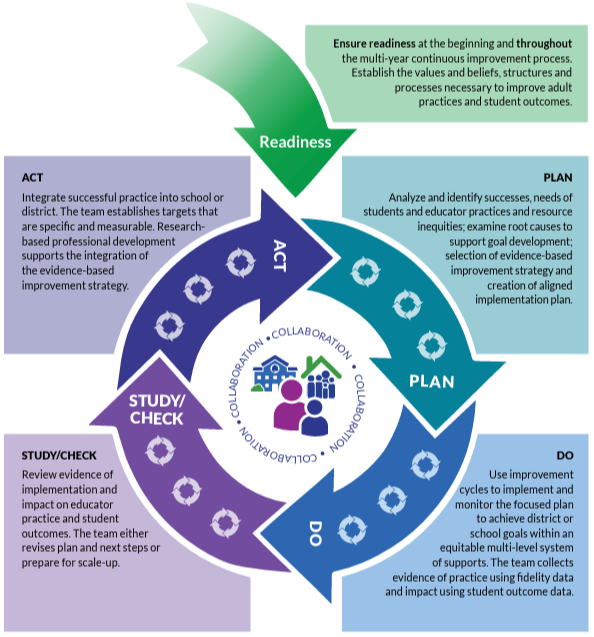
Image courtesy of the Wisconsin Department of Public Instruction
Continuous Improvement

The Denmark School District engages in Continuous Improvement as a promise to deliver a guaranteed and viable curriculum, provide highly effective universal instructional for all students, and engage in a focused response to student learning.  Through a cycle of continuous improvement and strategic planning, the Department of Teaching and Learning in the Denmark School District strives to live its Mission to provide the highest level of educational programming to ensure students success within school and beyond.

This means:

  • All students have access to the curriculum and access to instruction that provides multiple entry points to grade-level curriculum.

  • All students have multiple ways to demonstrate their learning.

  • Staff can deliver quality content with engaging learning opportunities for all.

  • The district can refine placement practices to encourage access to course offerings.

  • The district provides multi-levels systems of support and enrichment.

  • The district can assess progress toward its goals and refine approaches where needed, including identifying necessary changes to programming, materials, course offerings, etc.

Early Literacy Remediation Plan

Early Literacy Remediation Plan

Early Literacy Remediation Plan

Act 20 requires each school district to articulate and post an early literacy remediation plan that includes all of the following:

  • The name of the diagnostic reading assessment the school districts uses

  • A description of the reading interventions the school district uses to address characteristics of dyslexia

  • A description of how the school district monitors pupil progress during interventions, including the tools used and their frequency

  • A description of how the school district uses early literacy assessment results to evaluate early literacy instruction

  • A description of the parent notification policy that complies with Act 20.

Click the image to the left to view the Denmark School District Early Literacy Remediation Plan.

Denmark School District Adopted Standards

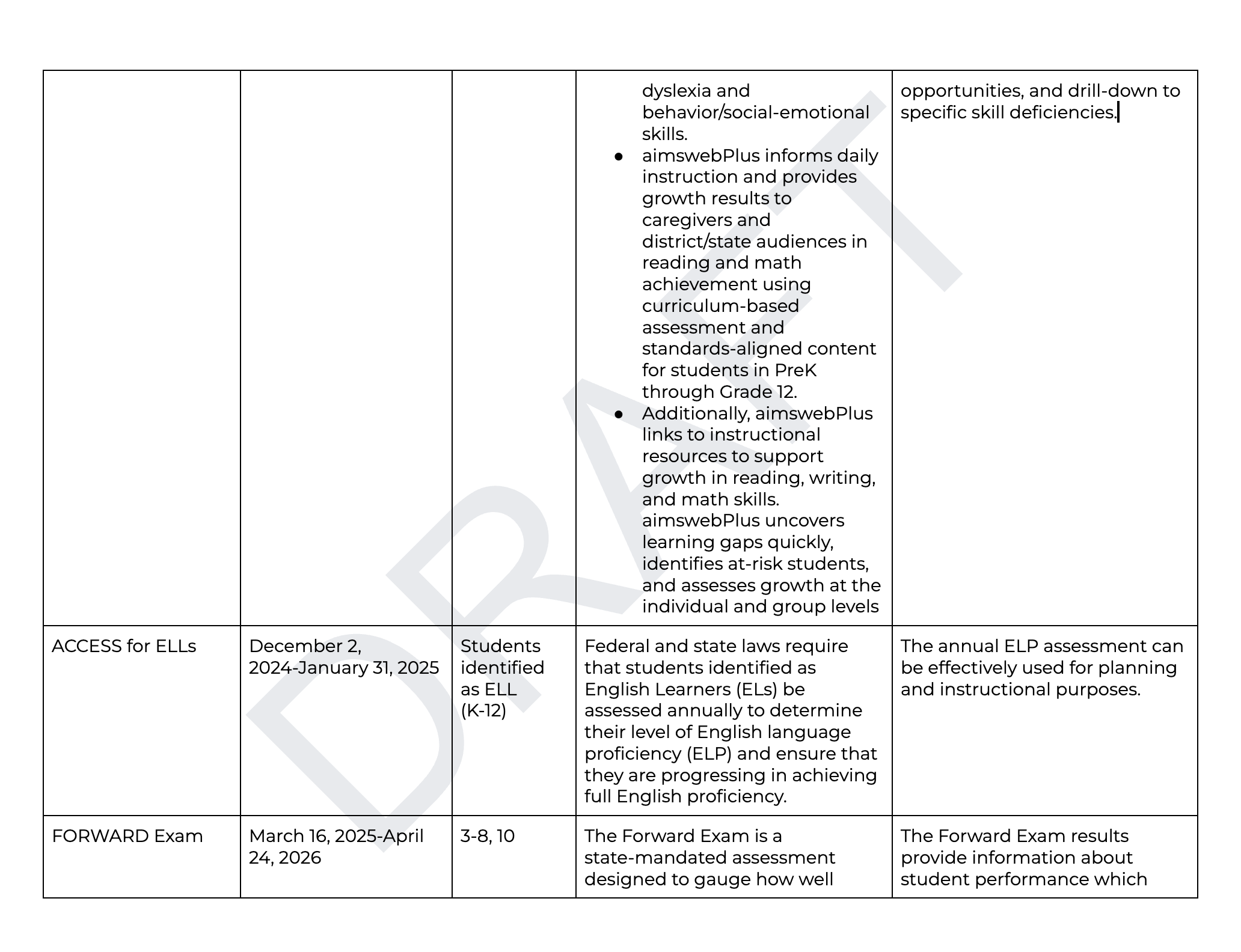
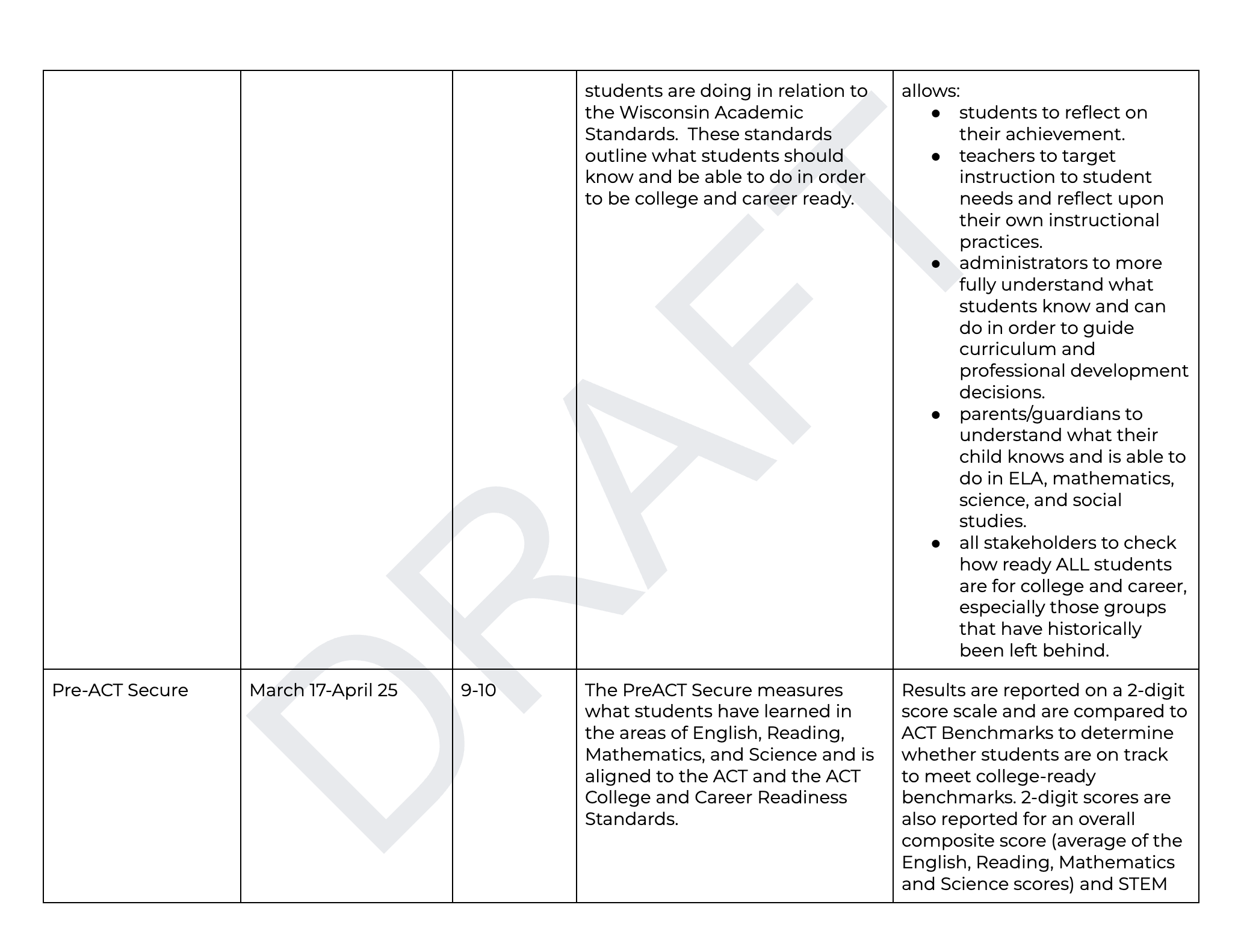
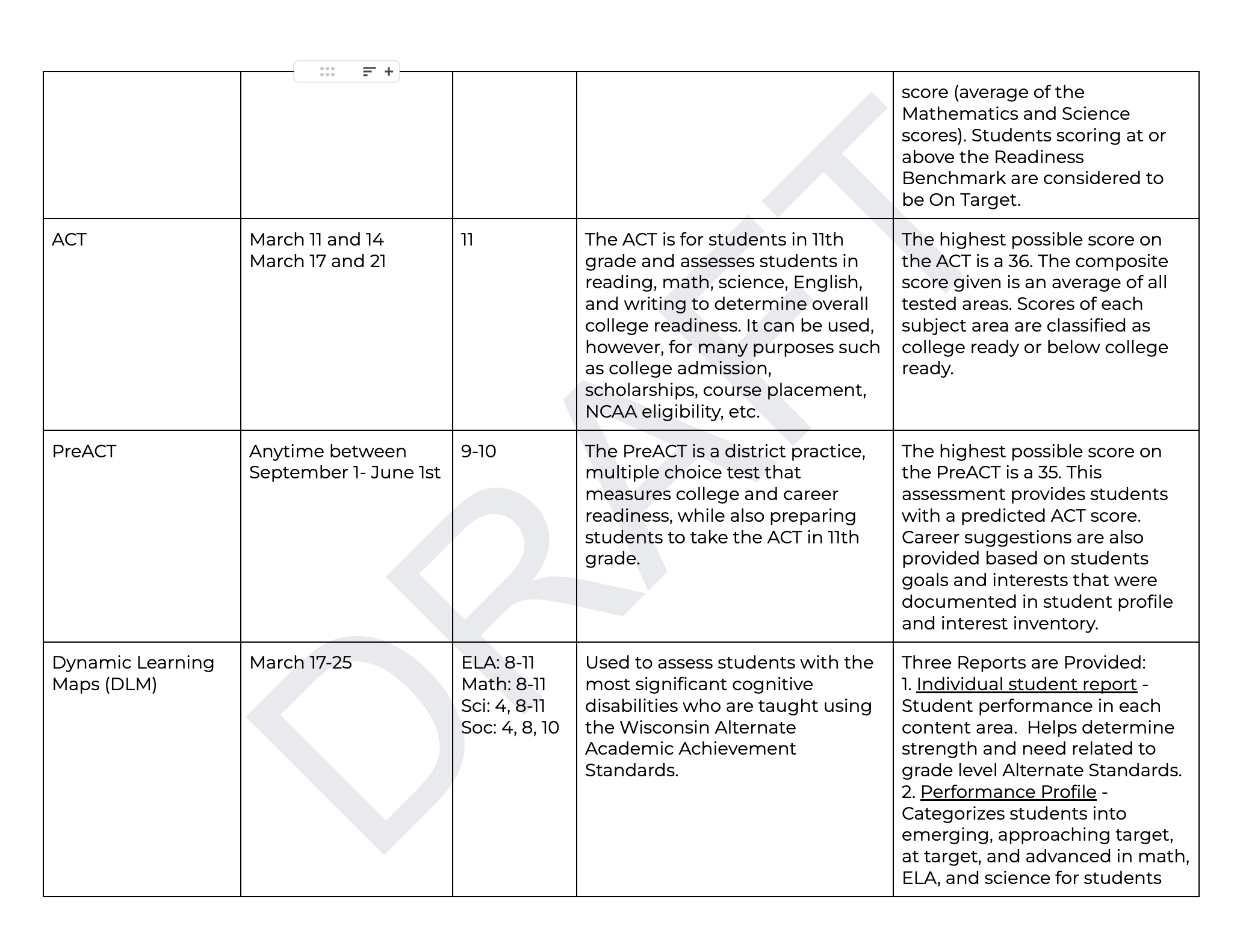
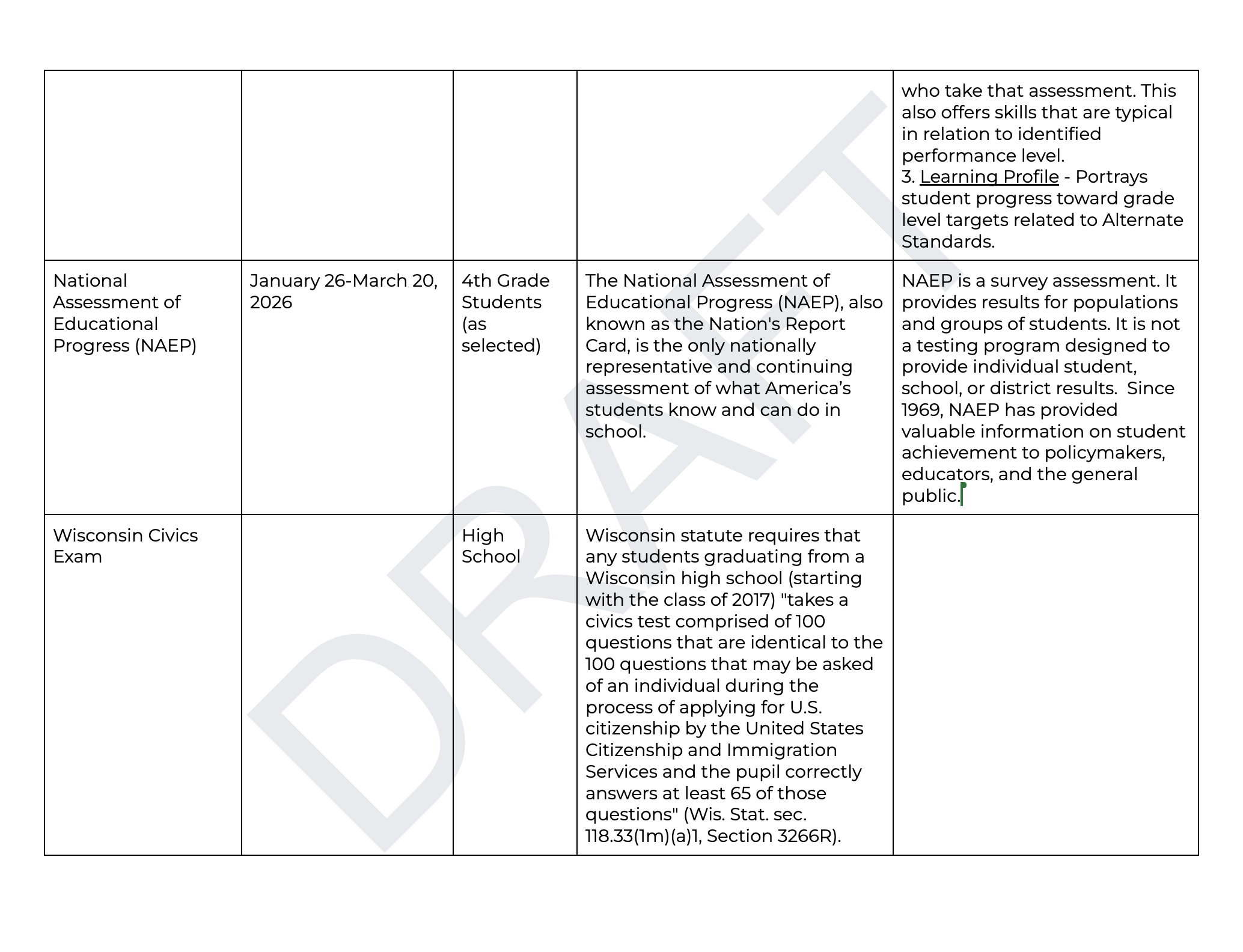
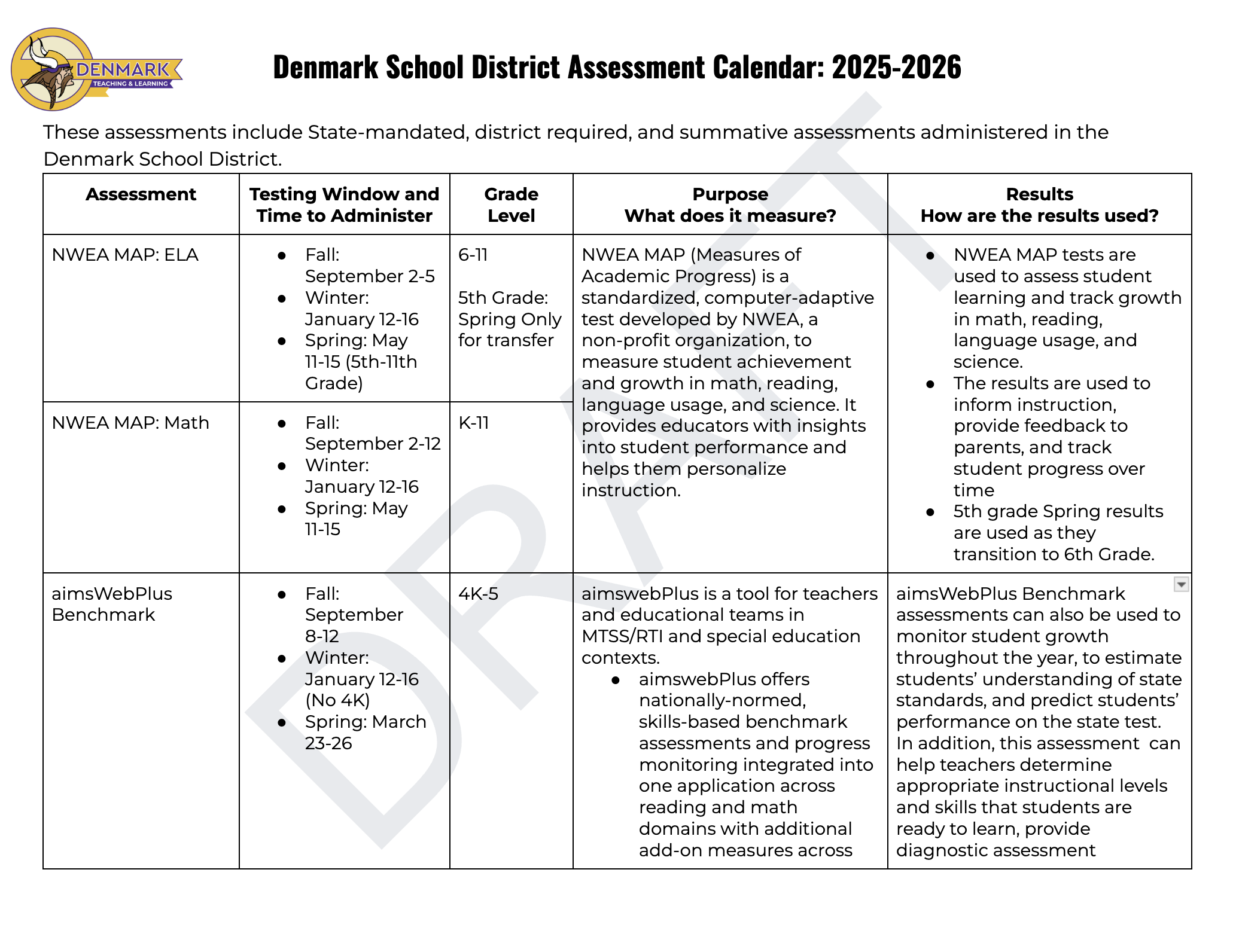
Assessment in the Denmark School District
Denmark Assessments, Page 1

Denmark Assessments, Page 2

Denmark Assessments, Page 3

Denmark Assessments, Page 4

Denmark Assessments, Page 5

Act 20 in the Denmark School District

Early Literacy Remediation Plan

Act 20 requires each school district to articulate and post an early literacy remediation plan that includes all of the following:

  • The name of the diagnostic reading assessment the school districts uses

  • A description of the reading interventions the school district uses to address characteristics of dyslexia

  • A description of how the school district monitors pupil progress during interventions, including the tools used and their frequency

  • A description of how the school district uses early literacy assessment results to evaluate early literacy instruction

  • A description of the parent notification policy that complies with Act 20.

Click here view the Denmark School District Early Literacy Remediation Plan.

Early Literacy Assessments

Per Wis. Stat. § 118.016 DPI has selected aimswebPlus by Pearson for early literacy screening in 4K through grade 3. You can access the aimswebPlus and WI Act 20 Assessment Matrix here.

Personal Reading Plan

In 5K through grade 3, the first time a student scores at or below the 25th percentile on the universal screener, the student is engaged in diagnostic assessment and a personal reading plan is created. A personal reading plan begins the first time a student scores below the 25th percentile on the universal screener. Therefore, a personal reading plan could begin after fall, midyear, or spring administration of the screener.

A Personal Reading Plan will include:

  • The pupil's specific early literacy skill deficiencies, as identified by the applicable assessment.

  • Goals and benchmarks for the pupil's progress toward grade-level literacy skills.

  • How the pupil's progress will be monitored.

  • A description of the interventions and any additional instructional services that will be provided to the pupil to address the pupil's early literacy skill deficiencies.

  • The programming that the pupil's teacher will use to provide reading instruction to the pupil. This programming must align to the definition of science-based early literacy instruction as stated in Act 20 and address the areas of phonemic awareness, phonics, fluency, vocabulary, and comprehension.

  • Strategies the pupil's parent is encouraged to use to help the pupil achieve grade-level literacy skills.

  • Any additional services available and appropriate to accelerate the pupil's early literacy skill development.

Additional Information from the Wisconsin Department of Public Instruction

Wisconsin State Academic Standards
Wisconsin Academic Standards specify what students should know and be able to do in the classroom. They serve as goals for teaching and learning and serve as the foundation for educational programming in the Denmark School District.

Every Student Succeeds Act (ESSA)
The Every Student Succeeds Act (ESSA) requires all states to test all students in English language arts (ELA) and mathematics in grades 3-8 and once in high school. ESSA also requires students be assessed in Science once each grade span (3-6, 7-9, and 10-12 grades). Student performance on these assessments is reported in proficiency categories and used for accountability determination at the school, district and state levels. Wisconsin State statute also requires students to take grade 9 and 10 assessments as well as the social studies test. These tests together create the Wisconsin Student Assessment System.

Wisconsin Student Assessment System
The Wisconsin Student Assessment System (WSAS) is a comprehensive statewide program designed to provide information about what students know in core academic areas and whether they can apply what they know. The School District of Denmark the following assessments as identified by the Wisconsin Student Assessment System:

  • aimswebPlus Universal Screener and Diagnostics

  • Wisconsin Forward Exam

  • Pre ACT Secure

  • ACT with Writing

  • Dynamic Learning Maps (DLM)

  • National Assessment of Educational Progress (NAEP) in 2025-2026

For more information about which assessments are administered at each grade level, please see the 2024-2025 Wisconsin Summative Assessments by Grade document.

Assessment in Wisconsin

The Wisconsin Student Assessment System (WSAS) is a comprehensive statewide program designed to provide information about what students know in core academic areas and whether they can apply what they know. To learn more, click the link above.

Informational Guidebook on Dyslexia and Related Conditions
Wisconsin's Informational Guidebook on Dyslexia and Related Conditions supports parents, guardians, teachers, and administrators in understanding dyslexia and related conditions.